Does Pilates Count as Strength Training? Here's What Women Should Know
Short answer: Yes. Pilates absolutely counts as strength training because it uses controlled, resistance-based movement patterns to challenge your muscles through time under tension, rather than just moving heavy weights around.
Let me explain.
The Question I Get All the Time
"Does Pilates really count as strength training, or do I need to lift weights?"
I get this question a lot. And I understand why you're asking.
Everywhere you look, fitness culture screams the same message: lift heavy or go home. Progressive overload. Max out your reps. No pain, no gain.
But here's what I've learned after a decade of teaching women Pilates through their 40s, 50s, and beyond:
The women who build the most impressive, lasting strength aren't the ones lifting the heaviest weights.
They're the ones who started with proper alignment, used smarter resistance, and worked WITH their bodies instead of against them.
That's what Pilates does differently. And that's why it not only counts as strength training—it might be the smarter choice for your body, especially after 40.
My Own Journey to This Answer
I discovered this myself after becoming a mom. I tried to go back to my old workout routine—the high-intensity classes, the heavy lifting, the "push through" mentality.
But everything felt different. My body wasn't responding the way it used to. Traditional workouts left me drained instead of energized. The thought of crowded gyms or bootcamp-style classes made me want to quit before I even started.
That's when I found Pilates.
It wasn't just another workout. It was a way to move that left me feeling stronger, not depleted. I was surprised at how much my body changed through consistent practice—even without lifting heavy weights.
That experience changed my life. It's what inspired me to become a Pilates instructor and eventually create my online studio—because I wanted other women to know there's a better way to build strength without it feeling like punishment.
What You'll Learn in This Post
✓ The science: Why Pilates qualifies as legitimate strength training
✓ The comparison: How Pilates stacks up against traditional weightlifting
✓ The truth: Whether Pilates alone is enough for your goals
✓ Real results: What women actually experience when they make the switch
✓ The decision: How to know if Pilates-based strength training is right for you
What Is Strength Training? (And Why Pilates Counts)
Here's the technical definition: Strength training is any exercise that makes your muscles work against resistance to build strength, endurance, and muscle mass.
Traditionally, people think this means:
Lifting dumbbells or barbells
Using weight machines at the gym
Doing bodyweight exercises like push-ups or squats
But here's what matters: The resistance doesn't have to come from heavy weights.
Any activity that makes your muscles work against resistance—whether from gravity, resistance bands, your own body weight, or specialized equipment—counts as strength training.
This is exactly what Pilates does.
Pilates uses controlled, deliberate movements that engage multiple muscle groups simultaneously. Your body weight becomes the resistance. Add props like resistance bands, Pilates rings, or small weights, and the intensity increases even more.
The difference? Pilates challenges your muscles through time under tension and proper muscle activation—not just moving heavy weight around.
How Pilates Actually Builds Strength
Let me break down exactly how Pilates functions as effective strength training:
1. Deep Core Strength (Not Just "Abs")
Pilates targets your deep core muscles—the ones that actually stabilize your spine and support your entire body.
I'm not talking about the superficial "six-pack" muscles everyone focuses on at the gym. I'm talking about:
Transverse abdominis (your body's natural corset)
Pelvic floor muscles
Multifidus (deep spinal stabilizers)
Diaphragm
Why this matters: A strong core improves everything—your balance, your posture, your ability to lift things without hurting your back, even your ability to breathe properly.
When I work with new clients, I can always tell who's been doing traditional ab work versus Pilates. The Pilates practitioners have functional core strength that shows up in how they move, not just how they look.
2. Resistance-Based Movement Patterns
Even in mat-based Pilates, you're constantly working against gravity.
Try holding a plank for 60 seconds. Your body weight becomes significant resistance.
Now add a resistance band to that movement, or try it on a Pilates reformer, and the level of resistance increases dramatically—just like adding plates to a barbell.
The difference is that you're building strength in a way that's joint-friendly and sustainable.
3. Isometric Holds and Controlled Repetitions
Here's where Pilates gets really interesting from a strength-building perspective.
Pilates emphasizes slow, controlled movements and isometric holds (holding positions without movement). This challenges your muscles differently than quick, repetitive lifting.
Example: Holding a leg lift at 45 degrees for 30 seconds works your hip flexors and core harder than doing 20 quick leg lifts with momentum.
You're forcing your muscles to maintain tension for longer periods. That's pure strength training.
4. Functional Strength for Real Life
Rather than isolating single muscles (like a bicep curl), Pilates focuses on functional movement patterns that train your body for everyday activities.
Think about:
Carrying groceries without your back hurting
Picking up your grandkids safely
Climbing stairs without getting winded
Maintaining good posture at your desk all day
Getting up from the floor with ease
This is functional strength. And it's often more valuable than being able to lift a heavy barbell once.
One of my clients recently told me: "I realized I was stronger when I could suddenly open jars that had been sitting in my pantry for months. That's when I knew this was working."
That's real strength.
Why Pilates Might Work Better Than Heavy Weights After 40
Here's something most trainers won't tell you about lifting heavy weights:
When you lift weights that are too heavy for your current stability, your body compensates.
I see this pattern constantly:
Your neck muscles take over for your shoulders.
Your lower back compensates for your weak core.
Your "bully muscles"—the bigger, dominant muscles—do all the work while the muscles you're TRYING to strengthen don't fire at all.
The Pattern I See Every Week
A woman comes to my class. She's been lifting 10-15 pound dumbbells at the gym because that's what her trainer told her to do.
But she has chronic shoulder pain. Tight neck. Maybe some lower back discomfort.
We drop down to 2-5 pound weights in Pilates.
"That's it?" she asks. Sometimes they even look disappointed.
Yes. That's it.
But here's what happens: when we isolate the RIGHT muscle with proper form and hold it for 60 seconds with full engagement?
They're shaking harder than they ever did with heavy weights.
Halfway through class, they understand. They can actually FEEL their shoulders working for the first time. Not their neck. Not their traps. Their actual shoulder muscles.
That's the difference between moving weight around and actually building strength.
Your Body After 40 Needs a Different Approach
Here's what changes after 40 that the "lift heavy" crowd conveniently ignores:
Your tendons and ligaments don't recover as fast. Collagen production decreases. Your connective tissues need more time to adapt.
Your muscle recruitment patterns have likely been off for years. Decades of sitting, compensating for old injuries, poor posture—all of this creates dysfunctional movement.
You need alignment BEFORE you need intensity. Loading dysfunction with heavy weights just reinforces bad patterns and leads to injury.
Think about it this way: you wouldn't build a house on a cracked foundation and just keep adding floors. You'd fix the foundation first.
That's what Pilates does. We fix the foundation so that when you DO add load, your body can actually handle it.
Why Pilates Is Perfect Strength Training for Women
After teaching hundreds of women, I've noticed patterns in what they're actually looking for—and why Pilates delivers it better than traditional gym workouts.
What Women Tell Me They Want:
✓ Strength without intimidation - No weight room anxiety, no feeling "less than" because you can't lift as heavy as the person next to you
✓ Results without injury - Building strength that lasts, not dealing with chronic pain from overdoing it
✓ Flexibility with their schedule - Working out at home, on their timeline, without commuting to a gym
✓ Support for changing bodies - Exercise that works WITH hormonal changes, not against them
✓ A practice they actually enjoy - Something they look forward to, not dread
What Pilates Delivers:
Gentle but Genuinely Effective
Don't mistake "low-impact" for "easy." Pilates challenges your muscles intensely while protecting your joints. You'll be sore in all the right ways—without the risk of injury from heavy lifting.
No Gym Required
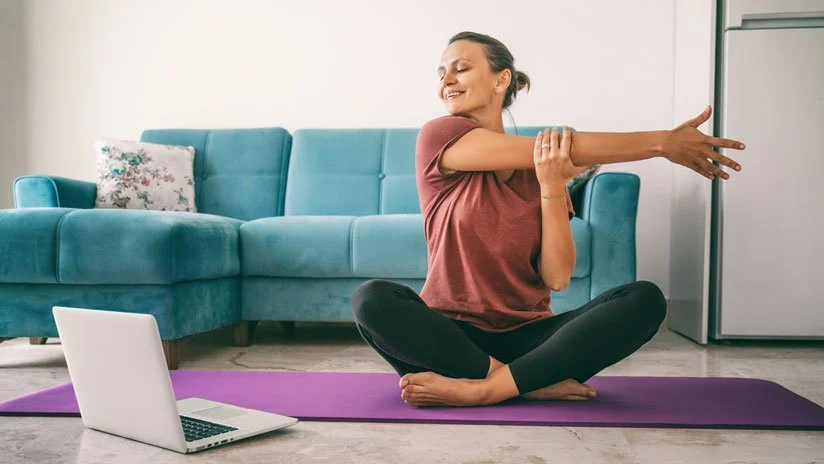
You can build real strength from your living room. No machines, no weight racks, no gym membership. Just you, a mat, and maybe some small props.
Supports Bone Health
This is crucial for women, especially after 40. Pilates includes weight-bearing exercises that help maintain bone density—important for preventing osteoporosis.
Improves Posture and Reduces Pain
Strengthening your core and stabilizing muscles eases common discomforts like back pain, neck tension, and tight hips. Many of my clients tell me this benefit alone changed their lives.
Creates Mind-Body Connection
Pilates isn't just about moving—it's about moving intentionally. This mindful approach reduces stress and helps you tune into what your body actually needs, rather than pushing through pain because you think you "should."
Real Results: What My Clients Actually Experience
Don't just take my word for it. Here's what one of my members told me after switching to Pilates-based strength training:
“I was so stiff and sore this morning but after this workout, I am moving easily and pain free! Thank you so much, Christine. My overall health has really improved, thanks to your classes ”
How Online Pilates Makes Strength Training More Accessible
One of the best things about Pilates is how perfectly it translates to online classes.
If the idea of commuting to a gym, dealing with crowded studios, or working out in front of mirrors makes you cringe, online Pilates solves all of that:
Convenience: Roll out your mat anytime, anywhere. Morning, lunch break, before bed—you decide.
Flexibility: Choose sessions that fit your schedule, whether it's a quick 20 minutes or a full hour.
Privacy: No crowds, no mirrors, no feeling self-conscious. Just you and your movement.
Replay Options: Revisit favorite classes to build confidence and perfect your form.
Progressive Programs: Follow structured plans that build strength systematically, not random workouts.
Cost-Effective: Online Pilates costs a fraction of gym memberships or in-person studio classes.
I created my online studio specifically for this reason. I wanted women to have access to high-quality Pilates instruction without the barriers—no commute, no expensive studio fees, no intimidation factor.
Just effective strength training you can do in your own space, on your own time.
Frequently Asked Questions
Does Pilates count as strength training for weight loss?
Pilates builds muscle, and muscle boosts metabolism—which supports weight loss. However, weight loss also depends on nutrition and overall activity levels.
What I tell my clients: Pilates is excellent for building strength and improving body composition (more muscle, less fat). If weight loss is your primary goal, combine Pilates with a balanced diet and consider adding some cardio activities you enjoy.
The beauty of Pilates? It creates sustainable strength that supports a healthy metabolism long-term, not just quick results that disappear when you stop.
Can Pilates replace weightlifting completely?
It depends on your specific goals.
Pilates can fully replace weightlifting if you want to:
Build functional strength for daily activities
Improve muscle tone and definition
Strengthen your core and stabilizing muscles
Maintain bone density
Stay active without gym equipment
You might want to add weights if you want to:
Build significant muscle mass quickly
Lift heavy competitively (powerlifting, CrossFit, etc.)
Have specific athletic performance goals
Many of my clients do Pilates exclusively and have incredible strength. Others combine Pilates with some weight training. Both approaches work—choose what aligns with your goals and what you'll actually stick with.
How many times per week should I do Pilates to see strength results?
I recommend 3-4 times per week, 20-30 minutes per session.
Consistency matters more than duration. My clients who do shorter, more frequent sessions see better results than those who do one long class per week.
Why? Your body responds to consistent stimulus. Regular practice builds strength progressively and gives your muscles time to adapt and grow.
Plus, shorter sessions are more sustainable. You're more likely to stick with 25 minutes four times a week than dreading a 90-minute class.
Do I need equipment for Pilates strength training?
Not at all.
Mat-based Pilates uses your body weight as resistance—which is significant! You can build impressive strength with no equipment at all.
That said, adding small props can increase the challenge:
Resistance bands (add variable resistance)
Pilates ring/magic circle (adds resistance for upper body)
Small weights (1-3 pounds to start)
Pilates ball (adds instability, making exercises harder)
But none of these are required. Start with just your body and a mat. Add props later if you want more variety.
Can I do both Pilates and weight training?
Yes! Many of my clients do both and love the combination.
They tell me Pilates makes them BETTER at lifting because they've developed:
Proper core engagement
Better body awareness
Improved alignment
Stronger stabilizing muscles
More control and precision
If you enjoy weight training, keep it. Add Pilates to support your lifting practice, improve your form, and reduce injury risk.
If you're new to both, I'd recommend starting with Pilates to build your foundation, then adding weights later if you want to.
Will Pilates give me visible muscle definition?
Yes, with consistent practice.
Pilates builds lean muscle and improves muscle tone throughout your entire body. You'll see definition in your:
Arms and shoulders
Core and obliques
Legs and glutes
Back muscles
The timeline varies by person, but most women notice:
Improved posture and how their clothes fit: 2-4 weeks
Feeling stronger in daily activities: 4-6 weeks
Visible muscle definition: 8-12 weeks
Remember: you won't get "bulky" (which requires very specific training and nutrition). You'll build the long, lean muscle that most women actually want.
Is Pilates enough for bone health and preventing osteoporosis?
Pilates is excellent for bone health, especially the weight-bearing exercises.
When you work against resistance (even your own body weight), you stimulate bone-building cells. This helps maintain and even improve bone density—crucial for preventing osteoporosis.
That said, some research suggests high-impact weight training may build bone density slightly faster. But here's the thing: if high-impact training leads to injury, you won't be able to do it consistently.
Pilates offers sustainable, joint-friendly resistance that you can do for decades. That long-term consistency is what actually matters for bone health.
Many of my clients over 60 have shown improved bone density from consistent Pilates practice. Their doctors are often surprised—and impressed.
I'm a complete beginner. Can I start with Pilates for strength training?
Absolutely! Pilates is perfect for beginners.
Unlike some strength training that requires learning complex lifts or risking injury with heavy weights, Pilates meets you where you are.
Every exercise has modifications for different levels. You start with the basics, master the fundamentals, then progress at your own pace.
In my online studio, I have specific programs for complete beginners that teach you:
Proper breathing techniques
How to engage your core correctly
Basic movement patterns
How to modify exercises to your level
You don't need to be strong to start Pilates. Pilates is HOW you get strong.
Final Thoughts: Is Pilates Right for Your Strength Training Goals?
Here's what I want you to know:
Yes, Pilates counts as strength training. It builds muscle, increases endurance, improves functional fitness, and supports your overall health.
But more than that—Pilates offers something traditional gym workouts often don't: a sustainable, enjoyable way to build strength that you'll actually stick with.
After teaching hundreds of women for over a decade, I've seen the same pattern repeat:
Women try intense gym programs. They push through pain because they think they should. They get injured or burnt out. They quit.
Then they discover Pilates. They're skeptical at first ("Will this really work?"). But they try it because they're tired of the alternatives.
And something shifts.
They start moving in a way that feels supportive instead of punishing. They notice their shoulders dropping, their core getting stronger, their bodies responding. They stand taller. They move with more ease.
And one day, they realize they're not thinking about "getting back into shape" anymore. They're just moving. And their body is responding. Not to force. But to care.
You don't have to endure workouts that feel like punishment.
You don't have to choose between being strong and being pain-free.
You don't have to dread exercise.
There's a better way.
Ready to Experience Pilates-Based Strength Training for Yourself?
If you're curious whether Pilates can deliver the strength results you're looking for...
If you're tired of traditional workouts that leave you sore, depleted, or injured...
If you're ready to try a smarter approach to building strength after 40...
I'd love to invite you to try online studio free for 7 days.
Here's what you'll get:
✓ 20-30 minute classes designed specifically for women over 40
✓ No heavy weights required - just your body and a mat
✓ Proper form instruction so you're working the right muscles
✓ Progressive programs that build strength systematically
✓ A practice you'll actually look forward to - no yelling, no intimidation, no dread
Free for a week. Cancel anytime. No pressure. Just see if this way of building strength feels different in your body.
[Start Your Free 7-Day Trial →]
Still Have Questions?
I'm here to help. Email me at christine@my-pilates.ca and I'll personally respond. I read every message.
Or connect with me on Instagram @christinek.pilates where I share daily tips on building sustainable strength after 40.
Christine Kirkland is the founder of Christine Kirkland Pilates, an online Pilates studio designed specifically for women over 40. After teaching Pilates for over a decade and working with hundreds of women through perimenopause and beyond, she created a method focused on pain-free movement, proper alignment, and sustainable strength building. She believes strength training should make you feel capable, not broken.