What to Do Instead of Squats If Your Knees Hurt After 40
As a Pilates instructor for over 10 years, knee pain is one of the most common complaints I hear — especially from women over 40.
Many people tell me they want to stay active, but they feel stuck. Almost every workout program seems to include squats and lunges, and when those movements cause discomfort, it can be hard to know what to do instead. Do you push through? Modify? Skip strength training altogether?
For a lot of women, this becomes a quiet, frustrating struggle. You don’t want to complain, you don’t want to feel “limited,” and you definitely don’t want to give up movement — but you also don’t want to make your knees worse.
Here’s the good news: knee pain doesn’t mean you have to stop exercising — and it certainly doesn’t mean you’re weak or doing something wrong. It usually means your body is asking for a more supportive approach.
And you don’t have to suffer through it in silence.
Why Knees Often Start to Hurt After 40
Knee pain after 40 is incredibly common — and it’s rarely caused by one single thing.
As we age, a few natural changes begin to show up in the body. Joint cartilage becomes less resilient, recovery can take longer, and old movement patterns (or past injuries) that didn’t bother us before may start to make themselves known.
At the same time, many traditional exercises — especially squats and lunges — place a significant amount of load directly through the knees. If the hips, glutes, and core aren’t providing enough support, the knees often end up doing more work than they’re designed to do.
This is why hip strength and mobility matter so much — especially if you’ve noticed persistent tightness. I explain this more in Muscle Tightness: Why Stretching Isn’t Always the Answer
This doesn’t mean squats are “bad.” It means that the way we build strength often needs to change after 40.
Another important factor is how often women are told to push through discomfort. Many ignore early warning signs because they don’t want to feel like they’re doing less than they “should.” Over time, that pushing can turn mild irritation into ongoing pain.
The key thing to understand is this: knee pain is usually a signal — not a failure.
It’s your body asking for better support, smarter sequencing, and exercises that meet you where you are right now.
If Squats Hurt, Should You Stop Doing Them?
This is one of the most common questions I hear.
If squats cause knee pain, it’s okay to step away from them — at least temporarily. Avoiding a painful movement does not mean you’re avoiding strength. In fact, choosing exercises that feel supportive is often what allows you to build strength safely and consistently.
Strength training works best when:
The right muscles are doing the work
Joints feel supported, not stressed
Movements feel controlled and intentional
When those pieces are missing, the knees often take the brunt of the load.
The goal isn’t to force your body into a specific exercise — it’s to build strength in a way that actually helps your knees feel better over time.
What to Do Instead of Squats If Your Knees Hurt
If squats and lunges don’t feel good right now, there are plenty of effective alternatives that still build lower-body strength without aggravating the knees.
Gentle Pilates focuses on:
Strengthening the hips and glutes
Improving core support and alignment
Using smaller, controlled movements
Reducing unnecessary joint strain
By improving how your body supports itself, the knees are no longer asked to do everything on their own.
This approach is especially helpful after 40, when recovery, joint health, and sustainability matter more than pushing for intensity.
A 15-Minute Gentle Pilates Routine for Knee Pain After 40
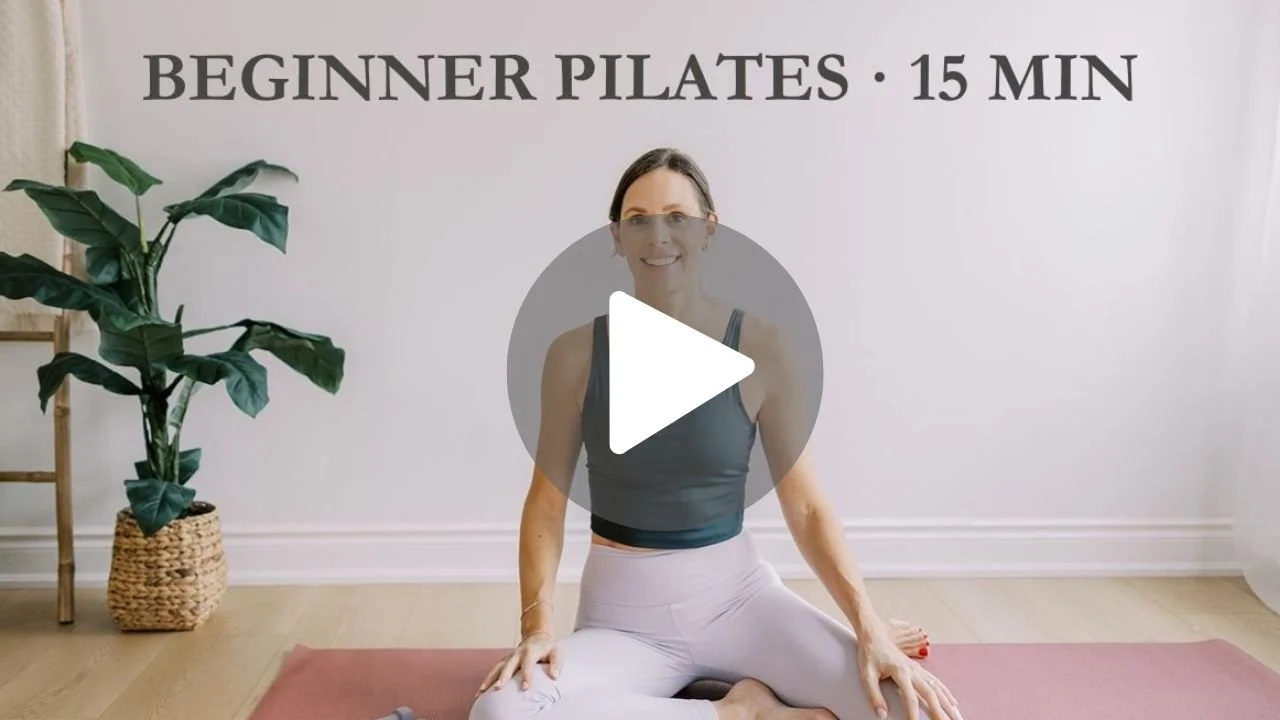
In the video below, I guide you through a short 15-minute Pilates routine designed specifically for women over 40 who experience knee discomfort.
This routine:
Avoids deep squats and lunges
Builds strength through supportive, joint-friendly movements
Focuses on hips, core, and alignment
Can be done at home with no equipment
Is short enough to fit into a busy day
You can follow along at your own pace and stop anytime something doesn’t feel right.
Is 15 Minutes of Pilates Really Enough?
This is another concern I hear often — especially from women who feel like workouts “should” be longer or harder to count.
When movements are intentional and well-supported, 15 minutes can be very effective. Gentle strength work done consistently can improve how your body feels, how you move throughout the day, and how confident you feel in your own body.
After 40, consistency matters far more than intensity.
Short, regular sessions that respect your joints are often what allow you to keep moving — not just for weeks or months, but for years.
If you’ve ever wondered whether short sessions really make a difference, I talk more about this in Is 30 Minutes of Pilates Enough to Lose Weight blog post.
Want More Supportive Strength Like This?
This short routine is exactly how we begin building strength inside my online Pilates studio.
If you’re looking for calm, supportive Pilates designed specifically for women over 40 — without jumping, burpees, or pushing through pain — you can try the studio with a free 7-day trial.
Inside the studio, this is how we build strength.
No rushing. No guessing. No pushing through pain because you think you “should.”
Classes are short and intentional, designed to fit into real life — and you’re guided week by week so you always know what to do next.
Every session focuses on supportive strength that respects your joints and helps your body feel more stable, not more strained.
It’s movement that works with your body — and actually feels good when you’re done.
👉 Try the Online Pilates Studio
Final Reassurance
If your knees hurt, you’re not broken.
You don’t need to push harder.
And you don’t need to give up on strength.
You just need a smarter, more supportive way to move.
–
Christine Kirkland is the founder an online Pilates studio designed specifically for women over 40. After teaching Pilates for over a decade and working with hundreds of women, she created a method focused on pain-free movement, proper alignment, and sustainable strength building. Learn more at my-pilates.ca