Most women who join my classes after 60 aren't coming from a gym. They've been avoiding exercise, and now something has changed.
Maybe her doctor told her to start moving for her health. Maybe she's stiff when she wakes up, or her body just feels noisier than it used to. Things that never bothered her before start to:
Reaching for something on the top shelf hurts her shoulder
Her back aches after sitting
Her hips are tight first thing in the morning
Her knees complain on the stairs
She runs out of steam sooner than she used to
The good news: the right kind of low-impact workout can make everyday life feel easier again. Here's what that looks like, and what most people miss.
Why walking alone isn't enough
When I ask new members what they do for exercise, the most common answer is walking. Walking is great, and I want you to keep doing it. But on its own, it leaves out three things your body needs more of as you get older.
1. Strength work
Your muscles need to work against resistance to stay strong. We naturally lose muscle as we age (this is called sarcopenia), and resistance work helps you hold on to it. Exercises that load your body are also part of a bone-healthy routine. I explain more in Is Pilates considered a weight-bearing exercise?
2. Balance work
This is the one most people skip, and I think it's the most important. A fall can change everything. Balance is a skill, and like any skill, if you don't use it, you lose it.
Research has linked being able to stand on one leg for 10 seconds with a longer life. Try the 10-second balance test and see where you're starting from.
3. Deep core strength
Many women don't know how to switch on their deep inner core. In Pilates we call it your powerhouse. It's what gives you strength and control for everyday things: lifting groceries, getting out of a chair, climbing stairs.
What a good low-impact workout looks like
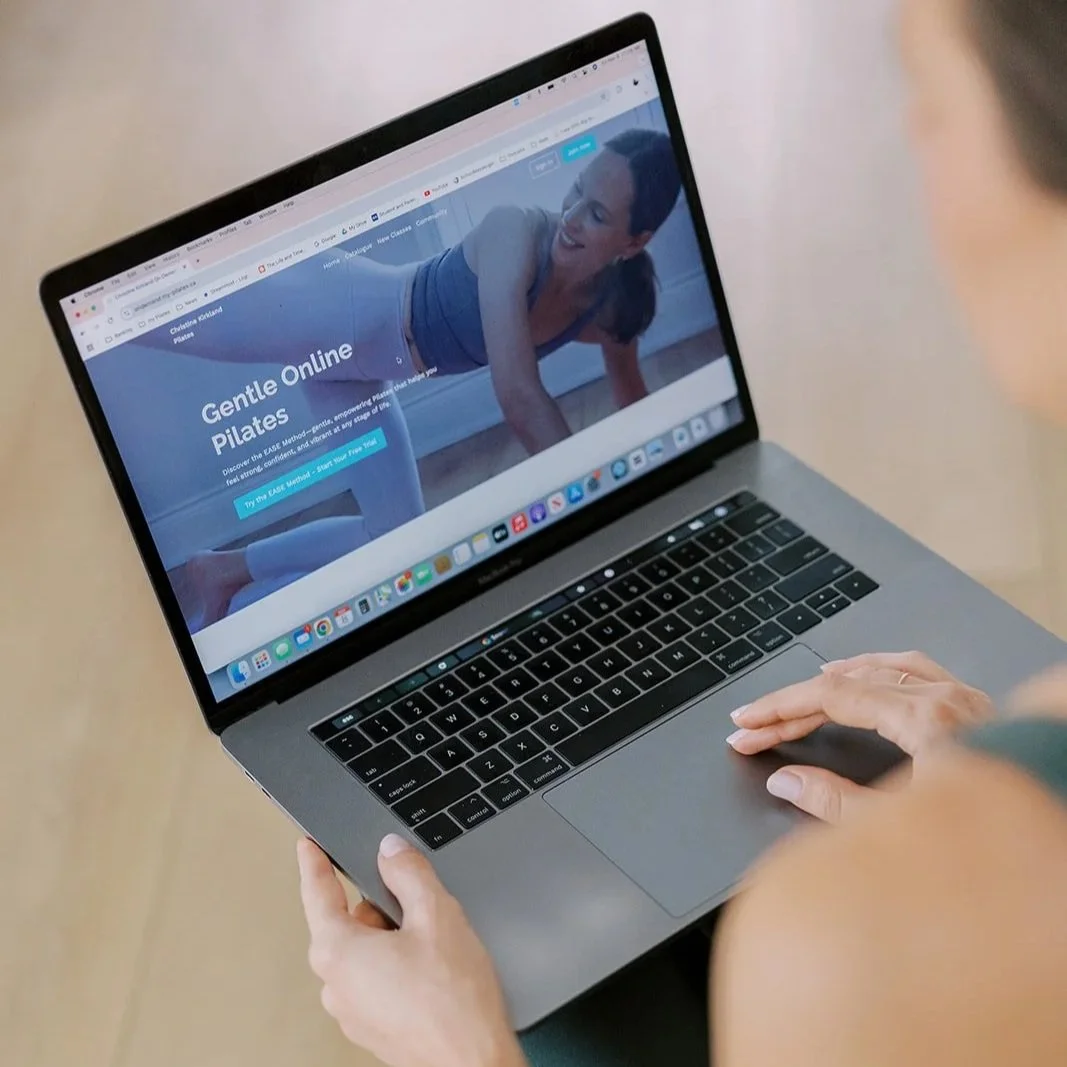
Every class in my studio follows the same three steps. This order matters, because it means you're building strength on a good foundation.
Realign. A dynamic warm-up to get stiff joints moving.
Stabilize. Stability work that teaches the right muscles to support you, so tight, overworked areas can let go.
Strengthen. Building strength, first with your own body weight, then with props when you're ready.
6 low-impact exercises to try at home
Check with your doctor before starting, and keep a chair or wall nearby for the standing moves.
Realign
Arm circles. Stand tall and circle your arms slowly forward, then back. Keep the circles small to start and let them grow as your shoulders loosen.
Heel raises. Stand with a hand on a chair or the wall. Rise up onto the balls of your feet, then lower slowly. Great for your ankles, calves and balance.
Standing side bends. Feet hip-width apart, reach one arm overhead and lean gently to the side. Come back to centre and switch.
Stabilize
Waving cat. All on fours or if knee pain is an issue do this with your hand on a low table or chair. Take one arm and reach it up to the ceiling. Repeat other side.
Strengthen
Bridge. Lie on your back with knees bent and feet flat. Press through your feet to lift your hips, then lower slowly with control.
Plank. Start on your knees, or with your hands on a counter, and hold a straight line from head to knees. Build up the time as you get stronger.
Once these feel comfortable, add a challenge with light weights, a resistance band, a small ball or a magic circle. If you'd like to know how far body-weight work can take you, read does Pilates count as strength training?
How often, and how long?
Start with two sessions a week, and focus on keeping it up. Consistency matters more than length.
In my studio, classes run from 15 to 55 minutes, so you can fit in what your day allows. There's also a new warm-up every week that's under 15 minutes, and many members use it as a stand-alone class on busy days.
If getting down to the floor is hard right now, start with standing Pilates exercises for better balance.
Age really is just a number
Years ago, I taught two classes in the same week. One was at a seniors centre, for people over 55. The other was at a physio clinic, for younger people who spent most of their week sitting at a desk.
I taught the same class to both groups. The seniors could do more. They were stronger and more flexible than the desk workers.
Don't let anyone tell you you're too old, too stiff or too far behind to start.
How to start safely
Get the okay from your doctor before starting any new activity.
Listen to your body and stay within the range of motion that feels right for you.
Stop if you feel pain or pinching. Take a break and try again another day.
Leave a rest day between workouts, especially at the start.
We all have to start somewhere. If you keep showing up, you will progress.
What changes
When the women in my studio stick with it, those everyday aches start to ease. Reaching, sitting, getting up in the morning and climbing stairs all get easier. One member put it best:
"Since starting Pilates I feel stronger in anything I do: swimming, hiking, tennis, vacuuming! Christine's teaching and cueing is amazing and really helps to bring awareness to your body." — Amy H.
Frequently asked questions
Is walking enough exercise for seniors?
Walking is a great start, but it doesn't train strength, balance or your deep core. Pair it with two short strength and balance sessions a week.
What if I can't get down on the floor?
Start with standing exercises like heel raises, side bends and standing balance work. Many classes can be done entirely standing.
How long should a workout be?
Shorter than you think. Fifteen to twenty minutes, done regularly, is a great place to start.
Ready to start?
My Pilates for seniors classes include gentle mat and standing workouts, with an easier option for every exercise. Try it free for 7 days and see how your body feels.
Christine Kirkland teaches Pilates to women over 40 who want to move with less stiffness and more strength.
