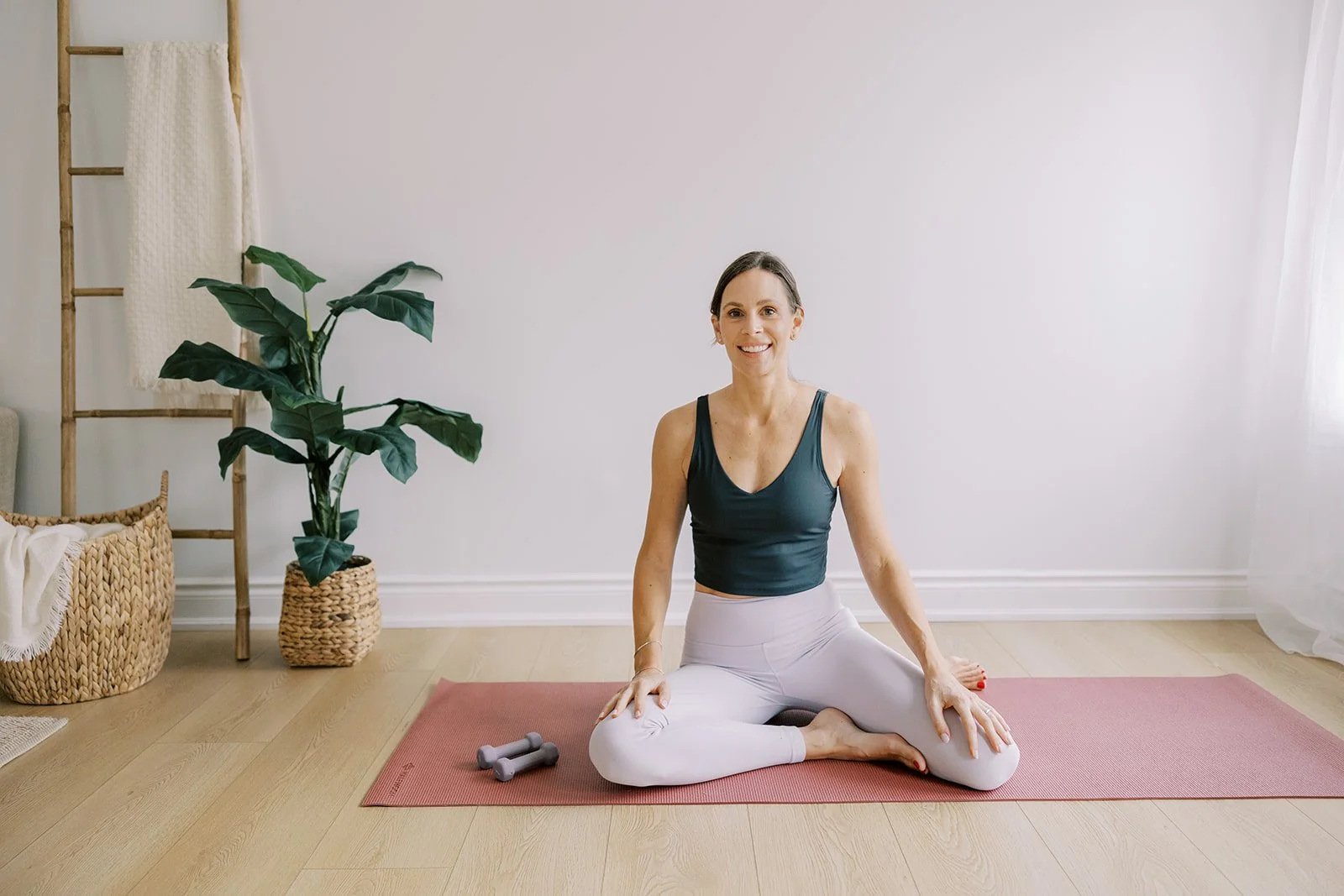
When your knees hurt, it's natural to move less. The stairs feel like a chore, getting up off the floor takes planning, and you start to wonder if this is just what getting older feels like.
In my classes, I see it differently. Very often, sore knees aren't only about age. They're about the muscles around the knee not doing enough to support it.
The good news is you can build that support with gentle, low-impact work, and you don't have to do a single squat or lunge to get started.
Why your knees hurt more than they used to
Your knee sits between your hip and your foot, and it relies on both. When the muscles around your hips, glutes and feet are weak, your knee takes more of the load with every step.
Alignment matters too. If your lower body isn't stacked well, your knees end up working harder than they should. In class, we work on alignment through the whole lower body so you're building strength on a strong foundation.
Tight hip flexors and thighs can add to the strain as well. If your hips feel stiff, read how to release tight hips.
If your knee pain is linked to arthritis, my post on gentle Pilates for arthritis covers that in more detail.
You don't need squats and lunges
Squats and lunges are the first exercises most people think of for stronger legs. But for sore knees, they're often the ones that aggravate them.
You can build real strength on the mat, with no weights, by working the muscles that support your knee: your hips, your glutes and your feet.
5 low-impact exercises for bad knees
Check with your doctor or physio before starting, and keep a chair or wall nearby.
1. Standing side leg lifts
Stand tall with one hand on a chair or the wall. Keep your hips level and lift one leg out to the side, then lower it with control. This works your glute medius, the muscle on the side of your hip. In my classes, I find it's often underused, and building it helps support your knees.
2. Side-lying leg lifts
Lie on your side with your head resting on your arm. Lift your top leg a few inches and lower it slowly. The only load is your own leg, which makes this a great way to target your glutes without stressing your knees.
3. Bridge
Lie on your back with knees bent and feet flat. Press through your feet to lift your hips, then lower slowly. Bridges strengthen your glutes and open the front of your hips and thighs at the same time.
4. Heel raises
Stand with your hands on a chair. Rise onto the balls of your feet, then lower slowly. Strong feet and ankles give your knees a better base to work from.
5. Standing foot balance
Hold a chair and shift your weight onto one foot. Feel your whole foot press into the floor, then hold for a few breaths before switching sides.
Your feet are the foundation of your body, and they play a direct role in how your knees feel. For more standing moves, try these standing Pilates exercises for better balance.
Want to follow along? Try my 30-minute Pilates for Knee Pain class, which builds hip and glute strength with a small ball.
How to protect your knees while you exercise
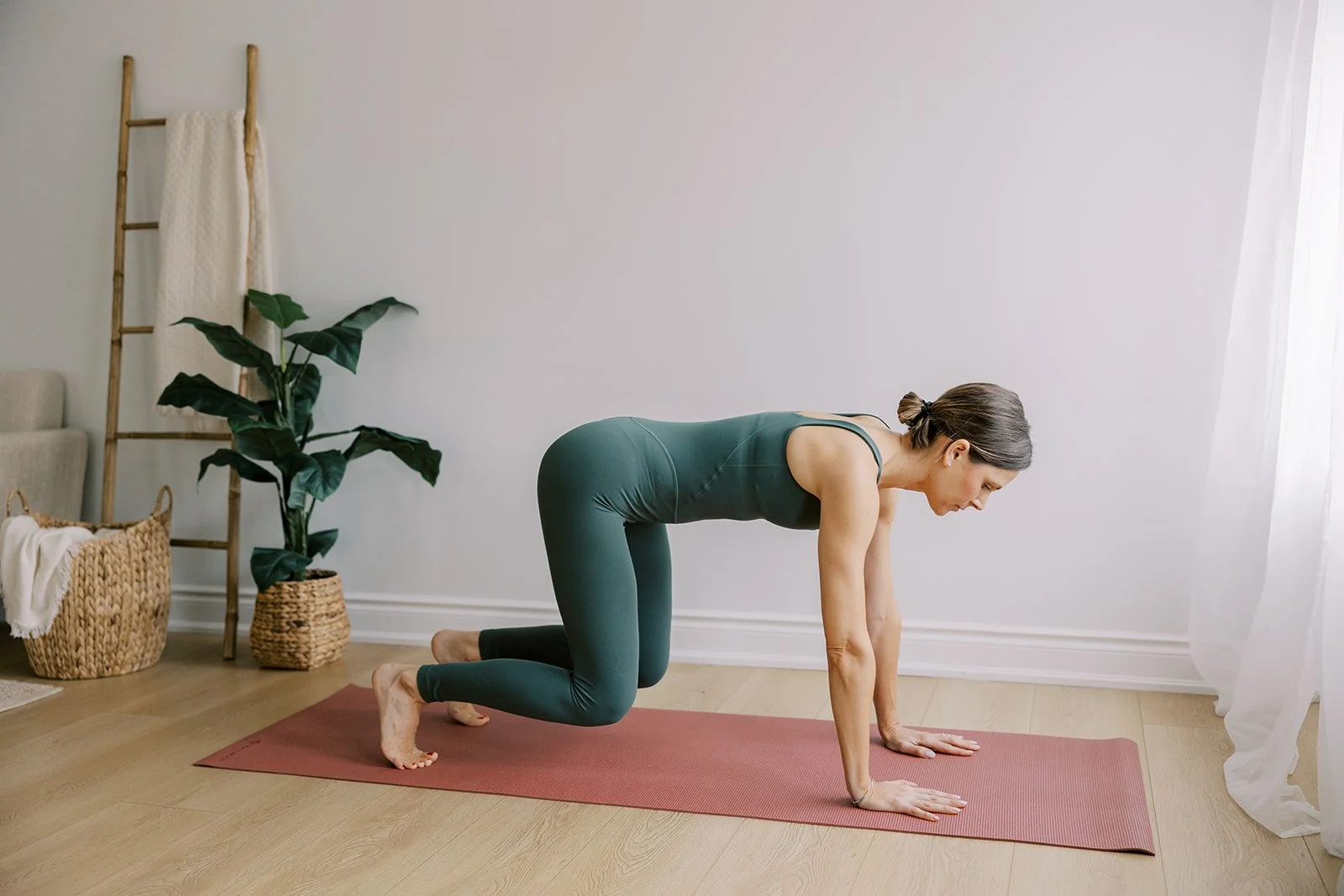
Stop an inch before it hurts. Shorten your range of motion whenever you feel pain or discomfort. Moving still matters, because movement helps lubricate your joints, but you never need to push into pain or pinching.
Use a chair or wall. Holding on during standing moves takes some of the load off your lower body.
Cushion your knees. On all fours, fold a towel under your knees.
Take the knees out of it. If they're very sensitive, do all-fours moves standing instead, with your hands on a low table or chair.
How often, and what to expect
Aim for 3 to 4 times a week. Give it 2 to 3 weeks of regular practice before you judge how it's going.
Everyone is different. If you've had knee pain for a long time, it may take longer to notice a change. Be kind to your body, and don't get discouraged if you don't feel a difference after the first week. Sticking with it is what pays off.
If you're over 60, my guide to low-impact workouts for seniors shows how to fit strength and balance into your week too.
What gets easier
As the muscles around their knees get stronger, members often tell me that getting up and down from the floor feels easier, stairs aren't such a struggle, and they can garden or walk without paying for it later.
"I notice that my body 'works better' now when I am golfing and gardening." — Hughena
Frequently asked questions
Can I exercise with knee pain?
Check with your doctor or physio first. Once you have the okay, gentle movement within a pain-free range is usually better than avoiding movement altogether.
Should I avoid squats and lunges?
If they hurt, yes, for now. Build strength through your hips, glutes and feet first. If you do lunges later, hold a chair or wall for support.
How long until my knees feel better?
It varies, but give it 2 to 3 weeks of practice, 3 to 4 times a week. It may take longer if you've had knee pain for years.
Ready to start?
My online studio has classes made for sore knees, including Healthy Knees, Pilates for Knee Strength and Knee Safe Pilates with the Magic Circle. Try my online Pilates classes for women over 40 free for 7 days.
_
Christine Kirkland teaches Pilates to women over 40 who want to move with less stiffness and more strength.
