Pilates for Women Over 50: How to Build Strength Without Getting Hurt
You know you should be doing something for your strength. Your doctor has mentioned your bones. Your friend swears by her weightlifting class. Everyone online is telling you to lift heavy.
But when you get out of bed in the morning, your hips are tight, your lower back is grumbling, and that old knee injury is reminding you it's still there. Lifting heavy feels like a recipe for getting hurt. And the gentle chair class at the community centre? You're not quite there yet either.
If that sounds familiar, you're not alone — it's exactly what I hear from the women in my studio every week. And it's why Pilates for women over 50 can be such a good fit. It's the step in between.
Why your body feels different after 50
First, let's be honest about what's going on — because it's not just "getting older."
We lose muscle. After 50, muscle mass declines faster, especially as estrogen drops through menopause. Less muscle means less support for your joints.
Bone density drops. The years around menopause are when bone loss speeds up, which is why your doctor keeps bringing it up.
Stiffness builds from stillness. Desk jobs, driving, scrolling on the couch — your body adapts to the positions you spend the most time in.
Old injuries leave patterns. That ankle sprain from years ago or the shoulder you've been babying? Your body has learned to work around them, and those workarounds add up.
None of this means you're fragile. It means your body needs the right kind of strength work — not more, not harder, but smarter.
What makes Pilates a good fit for women over 50
It's low impact but not low effort. There's no jumping or pounding, but you'll feel your muscles working — often in places you didn't know you had.
It builds real strength. Pilates works your deep core, glutes, back and legs, the muscles that hold you upright and protect your joints. Add resistance like a band, ball or light weights, and you're doing strength training.
It improves balance. Many Pilates exercises challenge your stability, which is one of the best things you can do to prevent falls.
It works with your body, not against it. Every exercise can be adjusted for stiff hips, sensitive knees or a cranky lower back.
It helps you move better in everyday life. Getting up off the floor, carrying groceries, playing with grandkids, gardening without paying for it the next day — that's the strength that matters.
My approach: undo first, then build
Here's where I think a lot of women go wrong — and I say this with love because I've seen it so many times. They jump straight into strength training on a body that's tight, misaligned and compensating. Then they get sore, or hurt, and give up.
In my studio, we follow a simple three-step formula:
Realign. Gentle, dynamic movement to wake up stiff joints and get your body moving the way it's meant to.
Stabilize. Targeted work in the small supporting muscles, which helps release tightness you've been carrying for years.
Strengthen. Once your foundation is solid, we add load with strengthening moves and isometric holds to build muscle and support your bones.
The result? You feel good and stronger — not sore and injured.
Try a free beginner Pilates class
The best way to see if Pilates works for you is to try it. This beginner class needs just a mat and a small pillow (ahh). It's a gentle, full-body introduction you can do at home today.
A few tips before you start:
Go at your own pace. If something doesn't feel right, skip it or make it smaller.
Focus on how it feels, not how it looks.
Notice how your body feels afterward — most women tell me they feel taller and looser.
How often should women over 50 do Pilates?
Aim for two to three sessions a week to start. Consistency beats intensity every time. Three 30-minute classes a week will do far more for you than one exhausting session you dread.
Many of my members tell me that when they miss a class, their body just doesn't feel right. That's when you know it's working.
Common questions
Is Pilates safe if I have osteoporosis or osteopenia? Many Pilates exercises are excellent for bone health, but some deep forward bends and twists should be modified. Check with your doctor and look for an instructor who understands bone health.
Do I need to be flexible? Not at all. Flexibility is something Pilates builds — not something you need before you start.
What if I can't get down on the floor easily? Start with standing Pilates classes. They build the leg and hip strength that makes getting up and down easier over time.
Can Pilates replace weight training? For many women, yes — especially when you add resistance. It builds the strength you need for daily life while protecting your joints.
Ready to keep going?
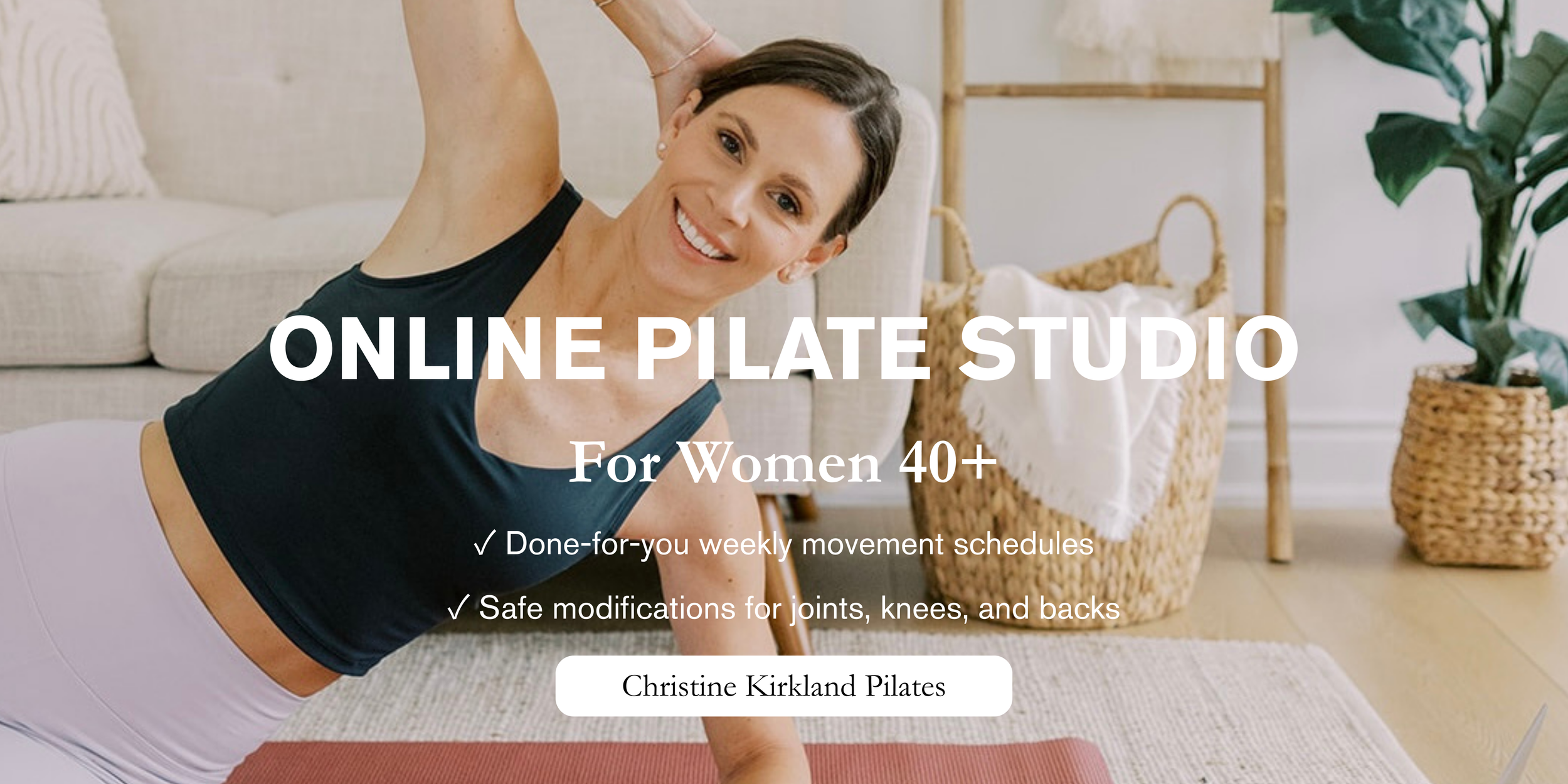
If you enjoyed the class, I'd love to have you join us. My online studio is built for women over 40 and 50 who want to get stronger without getting hurt — with 200+ on-demand classes you can do from home.
You don't have to choose between lifting heavy and doing nothing. This is the step in between.