The short answer: yes, when it's done the right way. Pilates with standing work, weights and bands can support your bones without the strain of heavy lifting. A few moves are best skipped, and I'll tell you which ones.
"Can Something This Gentle Really Help My Bones?"
Many women start moving because a DEXA scan tells them their bone density is declining. They come to my classes cautious. They're not sure something low-impact can really make a difference.
What I See in My Members
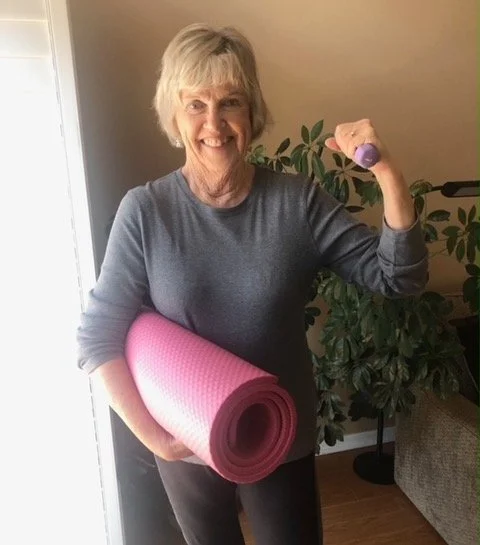
I see it regularly. One year, a member's DEXA scan shows low bone density. She joins my classes. Months later she goes back for another scan, and her bone density has improved.
It's such a proud moment. All the work she put in is showing up as a real shift in her health. And her doctor is usually proud too.
One member shared this after a class:
"Love this class. Just had my bone density test results. Increase in all areas. I think the Pilates exercises have definitely helped… my doctor agrees."
Every body is different, and I can't promise the same results. But stories like this are why I teach the way I do.
What Helps Build Bone
Standing and weight-bearing work
I include lots of standing and weight-bearing exercises. Your bones respond to load, and standing on your feet is where it starts. Here's more on whether Pilates counts as a weight-bearing exercise.
Light weights and bands
Props like light weights and a resistance band are fantastic for bone health. They add load without the strain that heavy lifting can put on your body. Wondering if that's real strength work? Read does Pilates count as strength training.
Footwork
Your feet are the foundation of your body. If they aren't moving well, it can contribute to knee and hip pain and leave you feeling less steady on your feet. That's why I include lots of footwork.
Feeling steady matters with osteoporosis, because a fall is the real risk. Try these standing Pilates exercises for better balance, or test yourself: can you stand on one leg for 10 seconds?
2 Bone-Friendly Moves to Try This Week
Both of these are standing, low-impact and easy to do at home. Hold the back of a sturdy chair for support.
Standing Heel Raises
Stand tall with your feet hip-width apart. Press through the balls of your feet and slowly rise onto your toes. Pause, then lower your heels with control. Do 10 to 12.
This works your feet, ankles and calves, and it loads your bones through your legs and hips. It's also great for balance.
Standing Side Leg Lift With a Band
Loop a resistance band around your ankles. Stand tall, holding the chair. Keeping your hips level, lift one leg out to the side, then lower it slowly. Do 8 to 10, then switch sides.
This strengthens the outer hips, which help keep you steady on your feet. Start without the band if you need to, and add it when you're ready.
What I Skip or Modify
Rolling Like a Ball. I don't teach it to women with low bone density. Rolling on your spine can be hard on it.
Standing bends with twists. I tend to avoid these too.
Anything your doctor has told you to avoid. Always follow your doctor's list first. Modify or skip any exercise on it.
A DEXA Result Isn't Permanent
It's information. Now that you know, you can take empowered steps to improve it.
Start moving, in any way
The first step is simply to move, in any way you can. It's as much about conditioning your brain as your body. The sooner movement becomes a habit, the sooner you'll see results.
Think lifestyle, not quick fix
This isn't one exercise class that instantly improves your bone scan. It's a lifestyle change. Build the habit, find your flow, and give your body time.
Frequently Asked Questions
Is Pilates safe if I have osteopenia?
Yes, with the same care I use for osteoporosis. Skip moves like Rolling Like a Ball and standing bends with twists, and follow any limits your doctor has given you. Osteopenia is a great time to start, because you're acting before your bone density drops further.
Can Pilates reverse osteoporosis?
No exercise can promise that. But weight-bearing and resistance work can support your bone health, and I've seen members' DEXA results improve after months of regular classes. Pilates works best as part of the plan you make with your doctor.
How often should I do Pilates for bone health?
Consistency matters more than intensity. Short, regular sessions you'll actually stick with beat an occasional hard workout. Here's my guide on how often women should do Pilates.
Do I need weights?
Not to start. When you're ready, light weights and a resistance band add load to your bones without the strain of heavy lifting. In my Boost Your Bones program, we use 5-pound weights.
Is mat Pilates or reformer better for osteoporosis?
You don't need a reformer. Mat Pilates with standing work, light weights and a band is how I teach bone health, and it's easy to do safely at home.
Ready to Start?
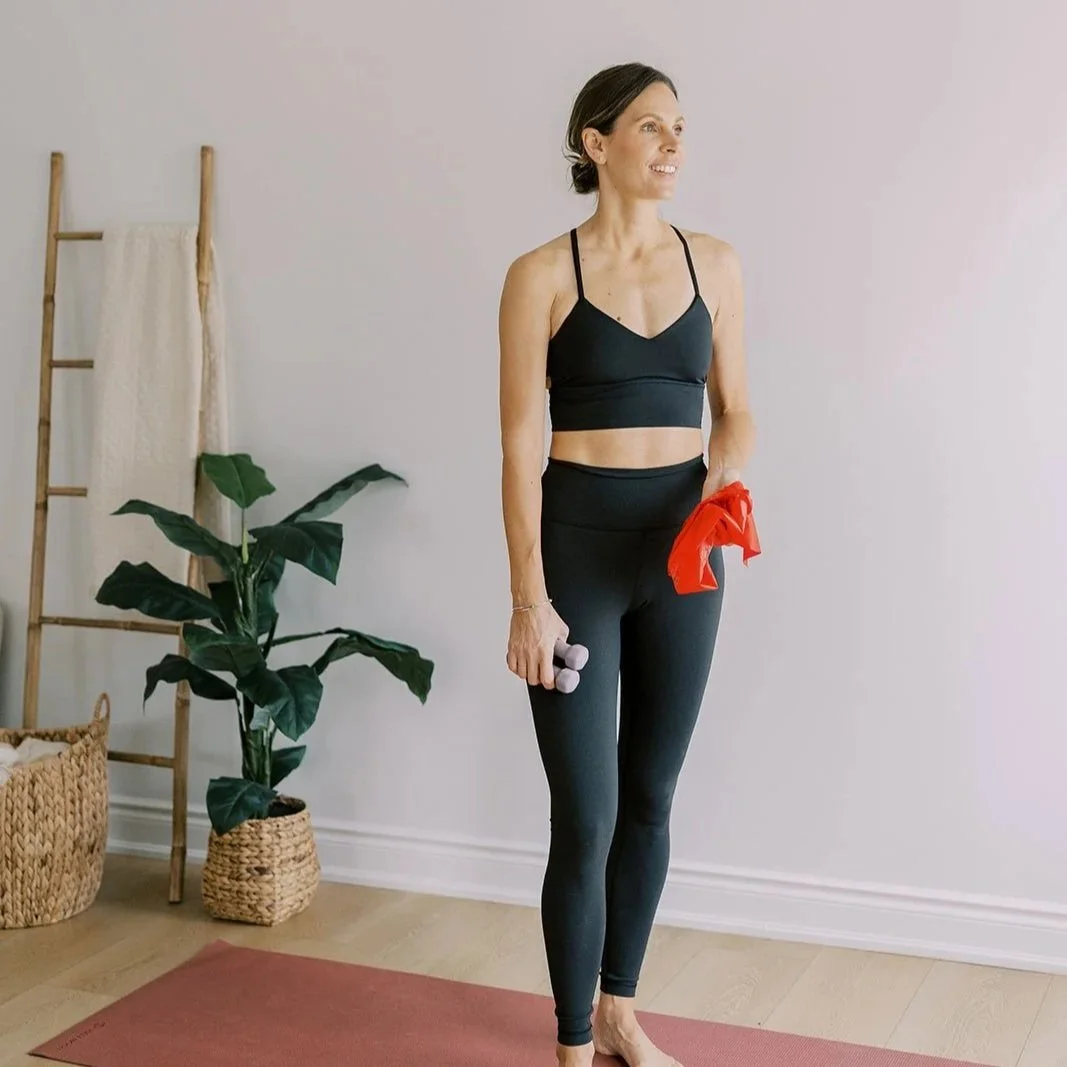
My Boost Your Bones program is a 3-week Pilates program built for bone health, balance and strength. It builds strength gradually:
Week 1: Lay the foundation, with alignment and core stability
Week 2: Load the bones, with light weights and standing strength
Week 3: Bring it all together with full-body classes
You get 8 classes, 30 high-protein recipes and lifetime access, for a one-time payment of $37.
If you have osteoporosis or osteopenia, check with your doctor before starting a new exercise program.
